Food Chains and Webs Explained – Chapter 13.4 Answers
Understanding how energy moves through ecosystems is one of the most essential parts of biology. Chapter 13.4 of many science textbooks—often titled “Food Chains and Food Webs”—explains this topic in depth. If you’re here searching for 13.4 food chains and food webs answers, you’re likely reviewing for a quiz, test, or just trying to understand the concept better. This guide offers a simple, engaging breakdown of everything covered in Chapter 13.4, from energy flow to trophic levels, with detailed answers and examples for students and teachers alike.
What Are Food Chains and Food Webs?
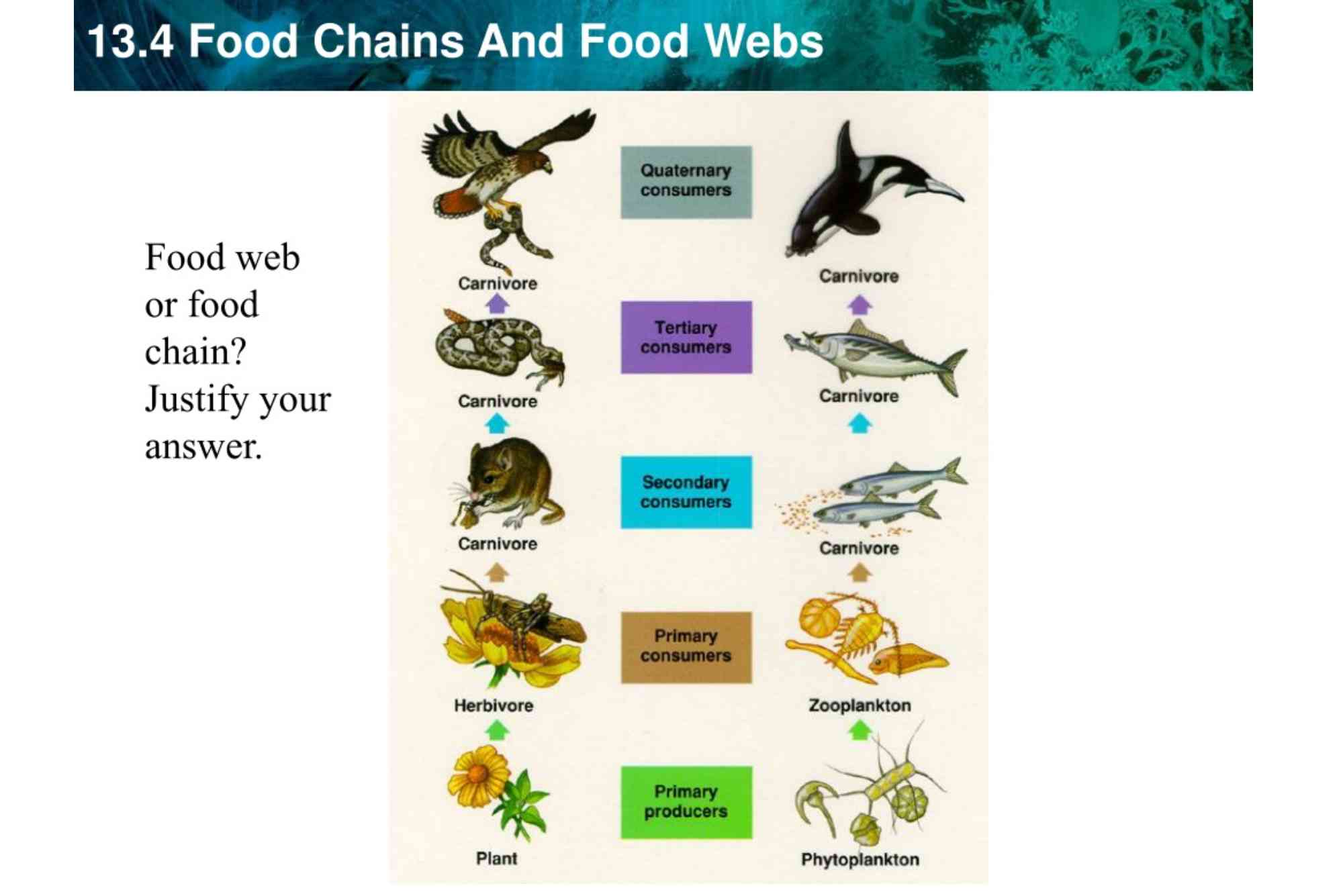
Before diving into the answers and explanations, it’s important to understand what food chains and food webs actually represent. A food chain shows a single pathway through which energy and nutrients flow in an ecosystem. It starts with a producer—like a plant—and follows a direct line through various consumers until reaching the apex predator.
In contrast, a food web is more complex and realistic. It combines multiple food chains to show how different organisms are interconnected in an ecosystem. Animals often eat more than one kind of food, which makes food webs a more accurate representation of nature.
Key Concepts from Chapter 13.4
Producers and Consumers
The first concept explained in this chapter is that of producers and consumers. Producers, like plants and algae, make their own food using sunlight through photosynthesis. All energy in a food chain starts with producers.
Consumers are organisms that must eat other organisms to get energy. These include herbivores, carnivores, omnivores, and decomposers.
Trophic Levels
The chapter introduces the idea of trophic levels, or positions in a food chain. The first level is always occupied by producers. Primary consumers (herbivores) eat producers, and secondary consumers (carnivores or omnivores) eat the herbivores. Tertiary consumers eat the secondary consumers, and the energy continues to flow up.
However, with each level, only about 10% of energy is transferred, while the rest is lost as heat. This principle is called the 10% Rule and is crucial in explaining why food chains rarely go beyond four or five levels.
Energy Flow and Ecological Pyramids
Chapter 13.4 also touches on ecological pyramids, which visually represent energy flow. These pyramids can be based on energy, biomass, or number of organisms. The energy pyramid shows how energy decreases as you go up trophic levels. A biomass pyramid shows the total mass at each level, while a pyramid of numbers shows the population size.
All these models reinforce the idea that producers support the rest of the ecosystem.
Food Web Complexity
The chapter emphasizes that real ecosystems don’t follow straight lines. That’s where food webs come in. They illustrate how many animals eat multiple things, and how one species can impact many others. For example, if a single species disappears, the entire web could be affected. This is called a trophic cascade.
Understanding food webs helps students realize the interdependence among species, which is a foundational idea in ecology.
Common Questions Students Ask
What is the main difference between a food chain and a food web?
A food chain shows one linear path of energy flow, while a food web shows multiple interconnected paths. The food web is a more accurate and realistic representation of how ecosystems work.
Why do most food chains only have 4-5 levels?
Due to the 10% energy transfer rule, there’s not enough energy to support many levels. As energy is lost at each step, very little is left for organisms at higher levels.
What happens when one organism in a food web is removed?
Removing one species can disrupt the entire web. For instance, if a predator is removed, prey species might overpopulate, leading to overgrazing or depletion of producers.
Chapter 13.4 Answers and Explanations
Question: What are producers and what is their role in the ecosystem?
Answer: Producers, like plants, make their own food using sunlight. They provide the base energy for all other organisms in the food chain. Without producers, there would be no source of energy for consumers.
Question: Explain the role of primary, secondary, and tertiary consumers.
Answer: Primary consumers eat producers (usually herbivores). Secondary consumers eat primary consumers (often small carnivores or omnivores). Tertiary consumers eat secondary consumers and are usually top predators.
Question: Why is energy transfer inefficient in ecosystems?
Answer: Because most energy is lost as heat during metabolic processes, only about 10% of energy moves to the next level. This inefficiency limits the number of trophic levels.
Question: What is the significance of food webs?
Answer: Food webs show the complex interactions between organisms. They help us understand how changes in one population can ripple across an entire ecosystem.
Question: What does an energy pyramid show?
Answer: It shows how much energy is available at each trophic level. The widest part (at the bottom) represents producers with the most energy, and the smallest part (top) shows tertiary consumers with the least.
Importance of Studying Food Chains and Food Webs
Learning about food chains and food webs isn’t just about passing a science test. It builds awareness of how fragile ecosystems are. When humans pollute, overhunt, or change the environment, they can unintentionally collapse entire food webs. For example, overfishing can reduce predator numbers, which then affects herbivores and algae in the ocean.
Understanding these systems also prepares students to think critically about biodiversity, conservation, and climate change. It shows how interconnected life on Earth truly is.
Real-Life Applications
These concepts aren’t just theoretical. They are used in environmental science, wildlife management, and even farming. Farmers use this knowledge to control pests naturally by maintaining a balance between predators and prey. Conservationists use food web models to understand how introducing or removing species can restore ecosystems.
In marine biology, studying food chains helps track how climate change impacts coral reefs, fish populations, and marine predators.
Final Thoughts on Chapter 13.4
Chapter 13.4 on food chains and food webs provides the backbone for understanding ecosystem dynamics. From producers to apex predators, each level plays a vital role. More importantly, the chapter encourages students to think about the consequences of imbalance in natural systems.
If you’re reviewing for an exam or just want to better understand the 13.4 food chains and food webs answers, remember the key concepts: energy flow, trophic levels, food webs, and the 10% rule.
By mastering this chapter, students build a strong foundation not just in biology but in environmental awareness as well.
FAQ
Q: What is a trophic level?
A: A trophic level is a step in a food chain or food web. Each level represents how far an organism is from the original energy source (sunlight).
Q: Why do food webs provide a more complete picture than food chains?
A: Food webs show the many feeding relationships between organisms, not just a single path of energy flow.
Q: Can humans be part of more than one trophic level?
A: Yes. Humans are omnivores and can be primary consumers (eating plants), secondary consumers (eating herbivores), or even tertiary consumers (eating carnivores).
Q: What happens if a keystone species is removed?
A: The removal can cause a trophic cascade that disrupts the balance of the entire ecosystem.
Q: Are decomposers part of the food web?
A: Yes. Decomposers like fungi and bacteria break down dead organisms, returning nutrients to the soil and closing the energy cycle.
Understanding food chains and food webs isn’t just about memorizing definitions. It’s about appreciating the elegant complexity of nature. From Chapter 13.4, we learn how energy flows, how life depends on other life, and how small changes can lead to big consequences.
If you found this explanation helpful and want more chapter summaries, worksheet help, or interactive lessons, bookmark this page or share it with your classmates.