
Stone Age Homes: A Journey into Prehistoric Architecture
The story of human civilization begins with shelter. Long before modern cities, people built stone age homes for safety and survival. These homes were more than simple shelters. They reflected intelligence, creativity, and adaptation to nature. By studying them, we understand how early humans lived, worked, and built communities.
What Were Stone Age Homes?
Stone age homes were the earliest human-made shelters. They varied from caves to huts made of stone, wood, or animal bones. These structures protected families from predators, weather, and rival groups. The design often depended on available resources and the environment.
The Role of Environment
People built homes near rivers, forests, or hunting grounds. Natural caves became ready-made shelters. In open plains, people used stones, clay, and sticks to construct huts. Arctic communities even relied on mammoth bones and hides.
Materials Used in Stone Age Homes
- Stone and rocks provided sturdy walls.
- Wood and branches formed the structure.
- Animal hides served as covers and insulation.
- Clay and mud sealed gaps and offered protection from wind.
Types of Stone Age Homes
Stone age homes were not the same everywhere. Different regions and periods influenced construction styles.
Cave Dwellings
Caves were the first homes for many communities. Natural formations offered shelter with minimal effort. People added fire pits, tools, and drawings to turn caves into living spaces.
Hut-like Structures
When caves were not available, people built huts. Wooden poles were arranged in a circle, then covered with mud, grass, or hides. These huts were temporary but functional for nomadic groups.
Stone Structures
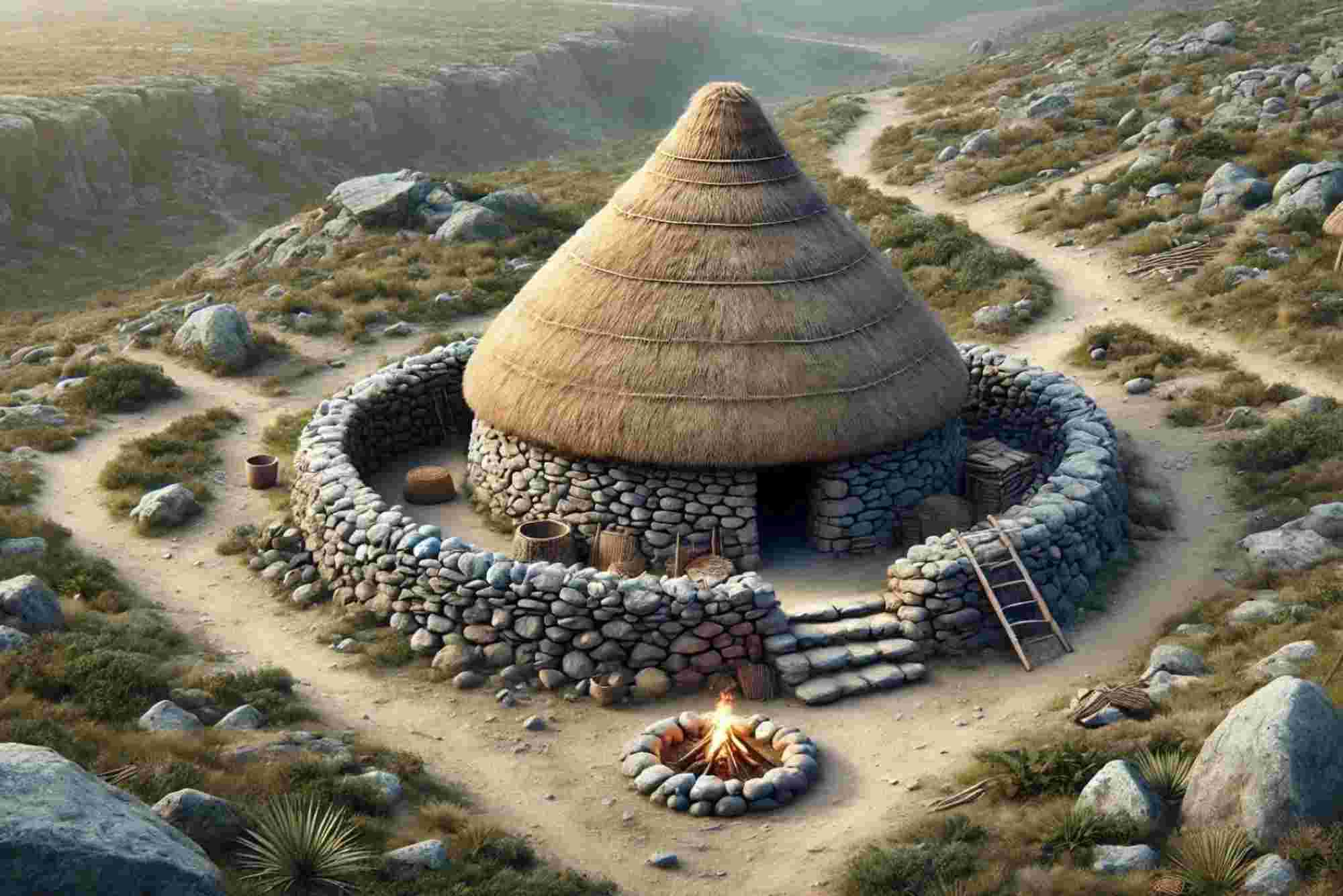
In later stone age periods, permanent stone homes appeared. These were rectangular or circular with strong walls. Some had small windows, doors, and even separate rooms. Archaeological sites like Skara Brae in Scotland reveal advanced stone-built homes with storage areas and furniture.
Daily Life Inside Stone Age Homes
Life in stone age homes centered on survival. Fire was crucial for warmth, cooking, and light. Families gathered around hearths at night. Stone tools and hunting gear often lay nearby. Storage pits held grains, nuts, or dried meat. Walls sometimes displayed carvings or drawings that reflected beliefs and culture.
Social and Family Life
Homes were family-centered. Several homes often clustered together, forming small villages. This setup encouraged cooperation in hunting, gathering, and protection.
Safety and Defense
Homes provided safety from animals like lions, bears, and wolves. In some cases, villages were built on raised ground or near water to improve defense.
Evolution of Stone Age Homes
The design of stone age homes improved over time. Early humans moved from temporary shelters to permanent dwellings.
Early Stone Age (Paleolithic)
Caves and tents of hides were common. Mobility was essential as people followed animal herds.
Middle Stone Age (Mesolithic)
People began to settle in one place for longer periods. Huts and wooden structures became more frequent.
Late Stone Age (Neolithic)
Permanent stone homes and villages emerged. Farming required long-term settlements. People built homes near fields and water sources. Some even developed communal spaces and burial sites.
Why Are Stone Age Homes Important?
Stone age homes are windows into history. They show how humans adapted to nature and laid the foundation for modern architecture. These homes highlight human innovation long before cities and skyscrapers.
Lessons from Prehistoric Architecture
- Use of natural materials inspires eco-friendly design today.
- Communal living shows the roots of human cooperation.
- Adaptability proves survival depends on creativity.
Famous Stone Age Homes Around the World
Several archaeological sites preserve stone age homes. They reveal impressive design and survival strategies.
Skara Brae, Scotland
A well-preserved Neolithic village with stone furniture, hearths, and passageways.
Çatalhöyük, Turkey
One of the earliest farming settlements with mud-brick houses and decorated walls.
Dolní Věstonice, Czech Republic
Homes built using mammoth bones and hides, showing adaptation to extreme cold.
FAQs About Stone Age Homes
What were stone age homes called?
They had no specific names. Archaeologists often describe them as caves, huts, or stone dwellings.
What did stone age homes look like?
They were simple, round or rectangular, made of stone, wood, clay, or animal hides. Some had storage areas and fire pits.
Did stone age people live in caves all the time?
No. While caves were common, many built huts or stone structures, especially in the Neolithic period.
How did stone age people stay warm inside their homes?
They used fire for heat and animal hides for insulation. Thick stone walls also helped retain warmth.
Are any stone age homes still standing?
Yes. Sites like Skara Brae and Çatalhöyük still show the remains of prehistoric homes.
What Stone Age Homes Teach Us Today
Stone age homes remind us that even in harsh conditions, humans found ways to thrive. Their designs reflected resourcefulness and community values. By studying them, we see the roots of architecture, culture, and survival.
If you’re fascinated by history and architecture, explore resources on prehistoric life and archaeology. Understanding the past helps us appreciate how far human innovation has come.