Introduction
Learning how to crate train a puppy fast can make life easier for both you and your new companion. A crate provides a safe, comfortable space where your puppy can rest, relax, and develop healthy habits. However, successful crate training requires patience, consistency, and positive reinforcement.
Many puppies initially cry at night or feel uncomfortable when left alone. Fortunately, the right approach can help them feel secure without creating unnecessary stress. This guide explains how to crate train a puppy fast, establish a peaceful nighttime routine, and manage separation-related distress.
Why Crate Training Is Important for Puppies
Crate training teaches puppies to enjoy spending short periods in their own space. It can support house training, encourage restful sleep, and prevent unsafe chewing when properly supervised.
However, a crate should never become a punishment. Your puppy must associate it with comfort, safety, and positive experiences.
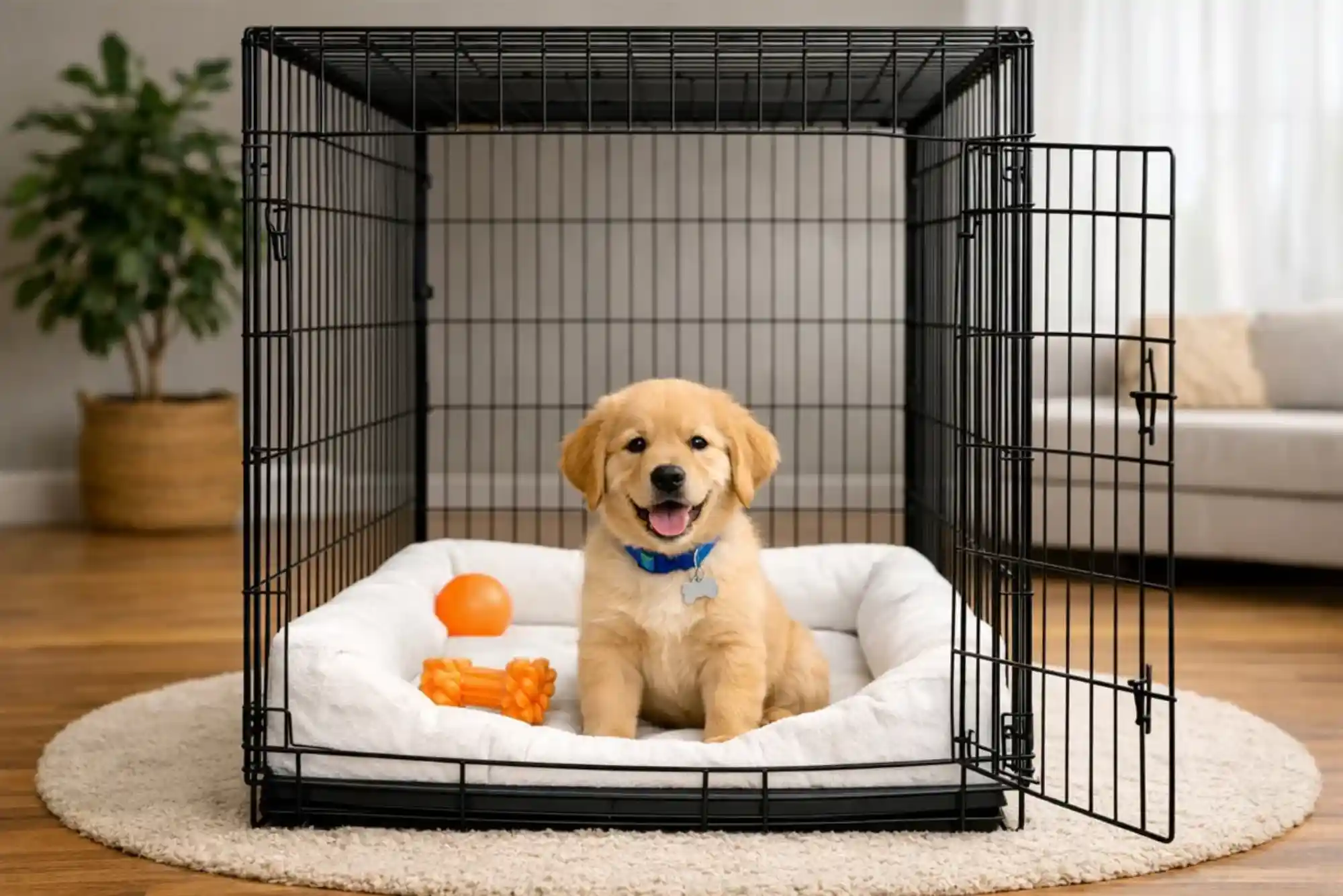
Choose a crate that allows your puppy to stand, turn around, and lie down comfortably. A crate that is too large may encourage accidents in one corner. For growing puppies, consider an adjustable divider.
Place the crate somewhere quiet but close enough for your puppy to feel connected to the family. During the first few nights, keeping it beside your bed can provide reassurance.

How to Crate Train a Puppy Fast With Positive Reinforcement
The fastest reliable approach involves short training sessions and rewarding calm behavior. Avoid forcing your puppy inside or shutting the door before they feel comfortable.
Introduce the Crate Gradually
Start by leaving the crate door open and allowing your puppy to explore freely. Place a few treats near the entrance, then gradually move them farther inside.
You can also offer meals near the crate. Once your puppy enters comfortably, place the food bowl inside to create a positive association.
Praise your puppy whenever they enter voluntarily. Keep early sessions short and relaxed. If your puppy appears frightened, return to an easier step.
Practice Closing the Door
Once your puppy enters willingly, close the door for a few seconds while offering a treat. Open it before your puppy becomes distressed.
Gradually increase the time with the door closed. Stay nearby initially, then take a small step away and return.
This gradual process teaches your puppy that being inside the crate is temporary and safe. Progress depends on your puppy’s comfort rather than a strict deadline.
Reward Calm Behavior
Reward your puppy for entering the crate, settling down, and remaining relaxed. Use small treats, gentle praise, or an appropriate chew toy.
Avoid opening the door immediately whenever your puppy makes a minor noise, if they are comfortable and simply seeking attention. However, do not ignore persistent distress or assume every cry is attention-seeking.
Your puppy may need a toilet break, reassurance, or help adjusting. Respond according to the situation instead of following a rigid rule.
How to Crate Train a Puppy Fast at Night
Nighttime crate training can be challenging because puppies are adjusting to a new home, unfamiliar sounds, and separation from their littermates.
A predictable evening routine helps them settle more comfortably.
Establish a Bedtime Routine
Give your puppy an opportunity to play, explore, and relax before bedtime. Avoid intense activity immediately before sleep.
Take your puppy outside for a toilet break just before placing them in the crate. Keep the final bathroom trip calm and predictable.
Place comfortable, washable bedding inside if your puppy does not chew or swallow it. A familiar-smelling blanket may also provide reassurance, provided it is safe for your puppy.
Dim the lights and reduce household noise. Speak calmly and reward your puppy for settling down.
Keep the Crate Near Your Bed
Young puppies often feel anxious when separated from their new family. Placing the crate near your bed allows them to hear and smell you.
If your puppy whines, pause briefly to assess the situation. They may need reassurance or a bathroom break.
Carry or guide them outside quietly if necessary. Give them time to toilet, then return them to the crate without starting an exciting play session.
Remember that very young puppies cannot reliably sleep through the entire night without bathroom breaks. Their needs vary according to age, health, and individual development.
Avoid Expecting Immediate Results
Some puppies settle quickly, while others need several nights or longer to adjust. Do not measure success only by how quietly your puppy sleeps.
Look for gradual improvements, such as entering the crate willingly, relaxing more quickly, and recovering calmly after brief separations.
If nighttime crying becomes intense or continues despite meeting your puppy’s needs, slow down and reassess your approach.
How to Crate Train a Puppy With Separation Anxiety
Some puppies struggle when they cannot see their owners. They may bark, pant, drool, scratch the crate, or attempt to escape.
These behaviors can indicate fear or separation-related distress rather than ordinary protest. Crate training alone does not cure separation anxiety.
Teach Your Puppy to Enjoy Being Alone
Begin with very short separations while your puppy remains relaxed. Ask them to settle in the crate with a suitable treat or safe enrichment toy.
Step away briefly, then return before anxiety develops. Gradually increase the distance and duration as your puppy becomes comfortable.
Practice different situations, such as sitting across the room or briefly stepping outside the door.
If your puppy becomes distressed, shorten the next session. Repeatedly exposing them to frightening experiences can make the problem worse.
Make Departures and Returns Calm
Avoid turning every departure into a dramatic event. Instead, establish a simple routine that helps your puppy understand what happens next.
You can occasionally pick up your keys or put on your shoes without leaving. This helps reduce the excitement or worry associated with departure signals.
When returning, greet your puppy calmly and provide attention once they are comfortable. However, do not withhold comfort from a genuinely frightened puppy simply to avoid rewarding excitement.
Recognize When Professional Help Is Needed
If your puppy repeatedly panics, injures themselves, or cannot settle despite gradual training, seek professional guidance.
A veterinarian can rule out medical concerns and assess possible anxiety. A qualified, reward-based trainer or veterinary behaviorist can develop an appropriate plan.
For some dogs, a safe exercise pen or puppy-proofed room may be more suitable than a closed crate. Safety and emotional well-being should always come first.
Common Crate Training Mistakes to Avoid
One common mistake is leaving a puppy inside for too long. Puppies need regular toilet breaks, movement, social interaction, and opportunities to explore.
Another mistake is using the crate after unwanted behavior as punishment. This can undermine the positive association you are trying to build.
Avoid forcing a frightened puppy into the crate. Instead, use treats, meals, and gradual exposure to encourage voluntary entry.
Never use a crate as a substitute for appropriate supervision. Remove collars or harnesses that could become caught, and avoid bedding or toys that your puppy might swallow.
Finally, do not assume that crying always means manipulation. Your puppy may be uncomfortable, frightened, overheated, or in need of the toilet.
How Long Does It Take to Crate Train a Puppy?
The time required depends on your puppy’s age, temperament, previous experiences, and comfort with being alone.
Some puppies begin entering their crates willingly within a few days. Others require several weeks of gradual practice before they can relax for longer periods.
Consistency is more important than speed. Several short, positive sessions often work better than one long session that overwhelms your puppy.
Keep a simple record of your puppy’s progress. Note how quickly they settle, how long they remain comfortable, and whether nighttime accidents become less frequent.
These observations can help you adjust the routine without rushing important steps.
Frequently Asked Questions
How long does it take to crate train a puppy?
Many puppies show progress within several days, but complete crate comfort can take weeks. Progress depends on consistent practice, individual temperament, and positive experiences.
Should I ignore my puppy crying in the crate at night?
No, not automatically. First check whether your puppy needs the toilet, feels uncomfortable, or is experiencing genuine distress. Respond calmly and adjust the training if necessary.
Should a puppy sleep in a crate on the first night?
Yes, if the puppy can enter comfortably and the crate is appropriately prepared. Keeping it beside your bed can help. Provide bathroom breaks whenever needed.
How long can a puppy stay in a crate?
There is no single duration suitable for every puppy. Young puppies need frequent toilet breaks and regular interaction. Avoid prolonged confinement, and adjust the schedule to age, health, and individual needs.
Does crate training help with separation anxiety?
A crate may provide comfort for some dogs, but it does not automatically resolve separation anxiety. If confinement increases panic, consider alternatives and seek professional advice.
Conclusion
Learning how to crate train a puppy fast starts with patience, consistency, and positive reinforcement. A comfortable crate, predictable nighttime routine, and gradual separation practice can help your puppy develop confidence.