Introduction
Learning how to socialize a reactive dog with other dogs safely can feel challenging for any dog owner. Your dog might bark, growl, lunge, or pull whenever another dog approaches. These reactions can make ordinary walks stressful and limit opportunities for positive experiences.
However, dog reactivity does not mean your dog is aggressive or impossible to train. It often develops from fear, frustration, overstimulation, or negative past experiences. With patience and the right approach, many reactive dogs learn to remain calmer around other dogs.
The key is to avoid forcing interactions. Instead, focus on building confidence, respecting your dog’s boundaries, and creating positive associations. Understanding your dog’s triggers will help you choose safer training opportunities and make steady progress.
Understanding Why Dogs Become Reactive
Before learning how to socialize a reactive dog with other dogs safely, it is important to understand what causes the behavior. Reactivity describes an intense response to a particular trigger. For some dogs, that trigger is another dog approaching too closely.
A fearful dog may bark to create distance. Another dog might become frustrated because the leash prevents natural movement. Some dogs react because they have experienced frightening encounters or missed important social learning opportunities.
Recognizing Common Signs of Reactivity
Reactivity often begins before barking or lunging occurs. Your dog might stare intensely, stiffen their body, close their mouth, raise their hackles, or tuck their tail. They may also pull forward or repeatedly look at another dog.

Recognizing these early signals allows you to respond before your dog becomes overwhelmed. If your dog cannot respond to familiar cues, refuses treats, or struggles to disengage, the situation may be too difficult.
Give your dog additional space rather than waiting for a reaction.
Why Forced Socialization Can Make Things Worse
Many owners believe reactive dogs need more direct contact with other dogs. Unfortunately, crowded dog parks and forced greetings can increase fear and frustration.
Repeated exposure without enough distance may make a dog more sensitive to triggers. This is sometimes called flooding, and it can undermine confidence.
Successful socialization does not require your dog to greet every dog they encounter. Instead, the goal is to help them feel safe and behave calmly around other dogs.
How to Socialize a Reactive Dog with Other Dogs Safely
The safest approach combines gradual exposure, positive reinforcement, and careful management. Every dog learns at a different pace, so adjust your training according to your dog’s behavior.
Start at a Comfortable Distance
Begin by finding a location where your dog can notice other dogs without reacting strongly. This might be a quiet park, a wide walking path, or an open area with plenty of room.
Keep enough distance for your dog to observe another dog while remaining relatively relaxed. This distance is often called the threshold.
If your dog starts barking, lunging, or refusing treats, move farther away. Avoid expecting your dog to cope with a situation that already feels overwhelming.
Over time, your dog may become comfortable observing other dogs from progressively shorter distances. However, progress should depend on their comfort, not a fixed schedule.
Use Positive Reinforcement
Positive reinforcement helps your dog associate the presence of other dogs with rewarding experiences. Carry small, high-value treats that your dog enjoys.
When your dog notices another dog and remains calm, offer a treat. You can also reward them for looking back at you, turning away, or choosing to move away from the trigger.
For example, your dog might see another dog across a field. Mark the calm observation with a word such as “yes,” then provide a treat.
Repeat this process while maintaining a comfortable distance. Eventually, the appearance of another dog may become a signal that good things are coming.
Never punish growling or barking. Punishment can increase anxiety and suppress warning signals without addressing the underlying emotion.
Practice Calm Observation Before Introductions
Direct contact should not be the first goal. Start by helping your dog become comfortable seeing other dogs at a distance.
Choose quiet training environments with predictable activity. Avoid narrow sidewalks, busy entrances, and places where approaching dogs could suddenly appear.
Reward your dog for calmly watching, sniffing the ground, or checking in with you. These behaviors indicate that your dog can process the situation without becoming overwhelmed.
Keep sessions short and end while your dog is still comfortable. Several brief, successful sessions are often more useful than one exhausting encounter.
Introducing Your Reactive Dog to Another Dog
Once your dog can remain relaxed around other dogs at a distance, you may consider a carefully managed introduction. Not every reactive dog needs direct interaction, and some dogs may prefer peaceful coexistence without greetings.
Choose a Suitable Dog and Location
Select a calm, socially appropriate dog with a responsible handler. Avoid dogs that rush toward unfamiliar animals or repeatedly ignore signals to create space.
A spacious outdoor area is generally more suitable than a confined room. Both dogs should have enough room to move away comfortably.
Use secure, well-fitted harnesses and ordinary leashes. Avoid retractable leashes during planned introductions because they can make distance management difficult.
If either dog has a history of biting or causing injuries, seek professional guidance before attempting an introduction.
Begin With Parallel Walking
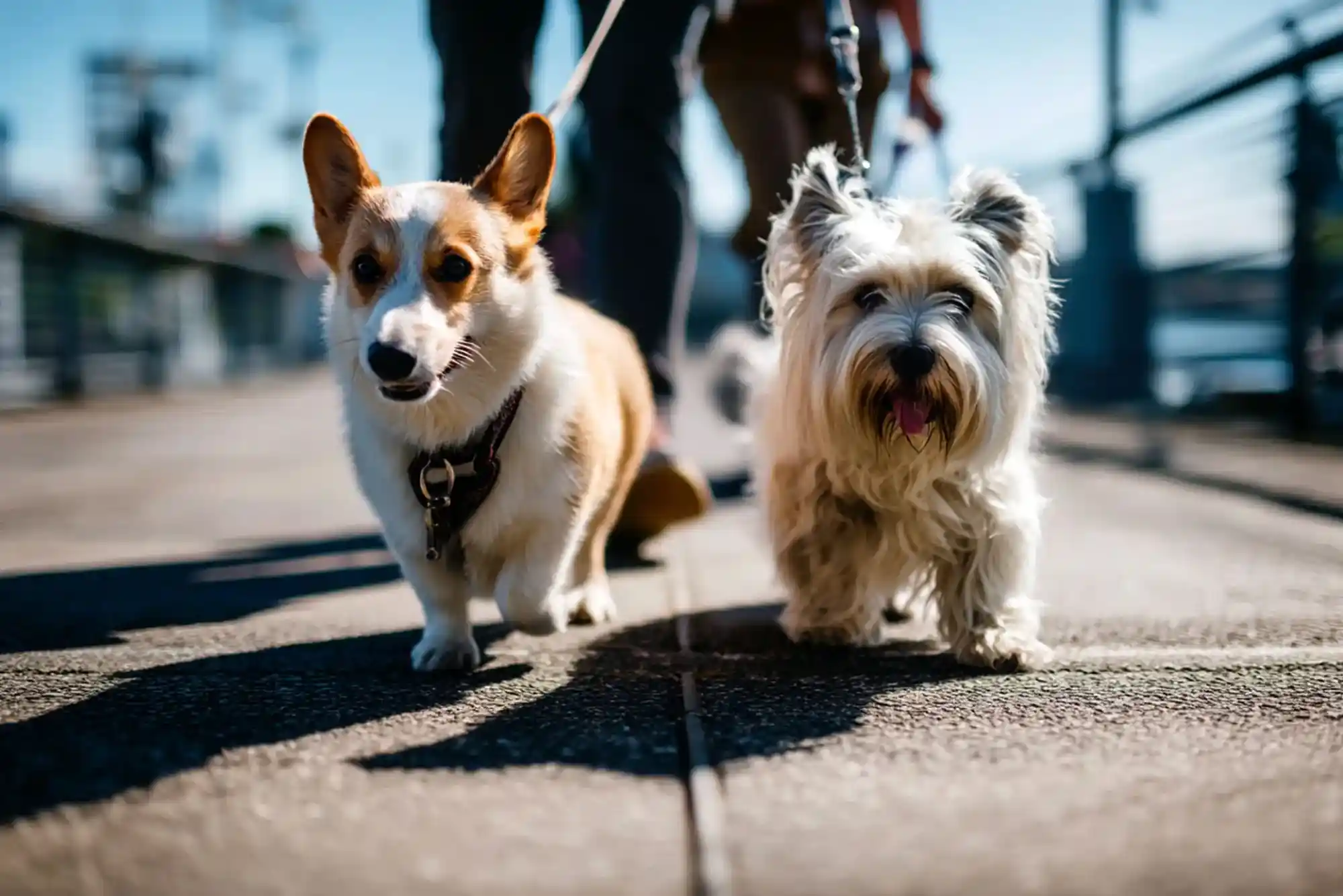
Parallel walking is often a useful way to introduce dogs without requiring immediate face-to-face contact.
Have both handlers walk in the same direction, maintaining a generous distance between the dogs. Avoid walking directly toward each other at first.
Reward calm behavior, relaxed movement, and voluntary attention toward the handler. If both dogs remain comfortable, gradually reduce the distance over multiple sessions.
Watch for stiffness, persistent staring, tucked tails, repeated attempts to escape, or escalating vocalizations. If either dog appears uncomfortable, increase the distance and allow them to settle.
Do not rush this process. Some dogs need several sessions before they can walk comfortably near another dog.
Allow Greetings Only When Appropriate
If both dogs remain relaxed, a brief greeting may eventually be appropriate. Keep the interaction short and allow both dogs to disengage naturally.
Avoid tightening the leash unnecessarily or forcing the dogs to remain close. Leash tension can restrict movement and increase discomfort.
Watch their body language throughout the interaction. Loose movements, voluntary re-engagement, and comfortable pauses are encouraging signs.
However, a wagging tail alone does not guarantee friendliness. If either dog freezes, repeatedly turns away, growls, or tries to retreat, calmly separate them.
Common Mistakes to Avoid During Socialization
One common mistake is moving too quickly. Owners may reduce the distance after one successful session, even when their dog is not ready. Instead, repeat successful exercises until calm behavior becomes more consistent.
Another mistake is using dog parks as training grounds. Unpredictable encounters, crowded spaces, and unfamiliar dogs can overwhelm reactive animals. Controlled environments offer better opportunities for learning.
Ignoring body language is equally problematic. A dog that stops barking might still feel frightened or tense. Look for overall relaxation rather than relying on a single behavior.
Finally, avoid correcting every bark or growl. These responses communicate discomfort. Focus on identifying the trigger, increasing distance, and rewarding calmer alternatives.
Creating a Safe Socialization Routine
Consistency helps reactive dogs understand what to expect. Plan short sessions in familiar locations and gradually introduce manageable changes.
Begin with distance-based observation and reward calm responses. As your dog becomes more comfortable, practice parallel walking with a suitable dog. Only consider closer interactions when both animals demonstrate relaxed behavior.
Keep a simple training journal to record triggers, distances, body language, and successful responses. This information can reveal patterns and help you recognize progress that might otherwise go unnoticed.
Remember that setbacks are normal. A stressful encounter, unfamiliar environment, or tired day may temporarily increase reactivity. When this happens, return to an easier exercise instead of pushing forward.
If your dog struggles to recover after seeing another dog, increase the distance and shorten the session. Progress should be measured by improved comfort and recovery, not simply by how close your dog can get.
When to Seek Professional Help
Some reactive dogs need additional support beyond home training. Consult a veterinarian if the behavior develops suddenly, becomes more intense, or appears alongside signs of pain. Medical discomfort can contribute to changes in behavior.
A qualified, reward-based dog trainer or veterinary behaviorist can develop an individualized plan. Professional guidance is especially important when your dog has bitten another animal, redirected aggression toward a handler, or repeatedly becomes difficult to control.
Choose a professional who uses humane, evidence-based methods and understands canine body language. Avoid approaches that rely on intimidation, physical corrections, or deliberately provoking reactions.
If there is a bite risk, prevent close encounters while arranging appropriate support. A properly conditioned basket muzzle may provide an additional safety layer when recommended by a qualified professional. It should allow panting and drinking and should never replace distance or supervision.
Frequently Asked Questions
Can a reactive dog learn to get along with other dogs?
Yes, many reactive dogs can learn to remain calmer around other dogs. Progress depends on the cause of reactivity, previous experiences, individual temperament, and training consistency. Some dogs may eventually enjoy selected canine friendships, while others do best with peaceful distance.
How long does it take to socialize a reactive dog?
There is no universal timeline. Some dogs show improvement within several weeks, while others need months or longer. The most important factors are consistent practice, manageable exposure, and avoiding overwhelming encounters.
Should I take my reactive dog to a dog park?
Dog parks are generally unsuitable for initial reactivity training. Unpredictable approaches and limited space can increase stress. Begin in quieter environments where you can control distance and movement.
Is it better to let reactive dogs meet off-leash?
Not necessarily. Off-leash interaction can introduce additional risks if either dog becomes frightened or aggressive. Start with controlled distance-based exercises and seek professional advice before considering off-leash introductions.
What should I do if my dog barks at every dog?
Create more distance as soon as you notice a trigger. Reward calm observation when your dog can still respond to you. If your dog is already overwhelmed, move away without punishment and try again in an easier setting.
Conclusion
Learning how to socialize a reactive dog with other dogs safely requires patience, observation, and a realistic understanding of your dog’s needs. Gradual exposure, positive reinforcement, parallel walking, and appropriate distance can help many dogs develop better coping skills.